All three of these run my own company today. That's the whole point - I'm not selling you a pitch deck, I'm showing you my own back office.
We Cancelled the Middleman
Situation. Dementia Success Path generates leads through Facebook Lead Ads. Like most small businesses, we were paying connector services (Zapier, then Leadsbridge) a monthly subscription just to move each lead from Facebook into our email platform. The fees scale with volume and they never end. And the tools added delay and gave us zero visibility when something broke - leads would just quietly stop showing up.
What I built. Our own pipeline. A Facebook app fires a webhook to a small cloud service I wrote, which authenticates with our email platform's API and drops each new lead into the right list - token management, error handling, logging, all of it. I built it with AI coding tools in days, not months.
What happened. The subscriptions are cancelled. Leads land in our email platform in under a second from the moment someone submits the Facebook form, which is actually faster than the paid tools ever managed. We own the pipeline outright. And when we switched email platforms, I repointed the same system instead of buying another connector plan - that's what owning it gets you.
The pattern for your business: if you're paying monthly "glue" fees to move data between systems you already own, that's a one-time build pretending to be a subscription.
Accounts Receivable Runs Itself
Situation. Invoicing our B2B partners, tracking who'd paid, and chasing late payments was eating owner hours every month, and the follow-ups slipped whenever things got busy. Money sat uncollected - not because customers refused to pay, but because nobody had time to ask twice.
What I built. An AI accounts-receivable clerk with its own data tables for partners, invoices, and payments. It generates invoices with payment links, tracks status and contract balances per partner, and drafts every collection email for one-click human approval. It even tracks whether the collection emails get opened and clicked, so we know who's actually ignoring us versus who just missed it.
What happened. Over $33,000 invoiced through the system across 14 partner accounts, with collections visibly tracked instead of forgotten. That's roughly 4-6 owner-hours a month back, and nothing slips through the cracks anymore. The human-approval design means the AI never sends a dollar-related email unreviewed - the judgment stays with the owner, the system does the remembering and the drafting.
The pattern for your business: AR is usually the highest-ROI first automation for a service business. The data is already structured, the emails are formulaic, and every recovered invoice is cash you can count.
A Marketing Department in Software
Situation. Sales pages and campaign emails for our monthly workshops were eating significant founder time, and the quality depended entirely on one person's bandwidth and memory of what had worked before.
What I built. An AI marketer trained on our complete email send history plus performance data from Instagram, Facebook, YouTube, and email. So it writes in our exact voice and it knows which topics and angles actually convert for our audience - not generic "best practices" from a blog post.
What happened. It now writes our workshop sales pages and marketing emails. It has written roughly 100 emails, and those emails have been sent millions of times to our subscriber list. The bottleneck moved from "founder writes everything" to "founder approves everything," and the knowledge of what works lives in the system now instead of in someone's head.
See it live - recent workshop sales pages written and largely assembled by the AI marketer:
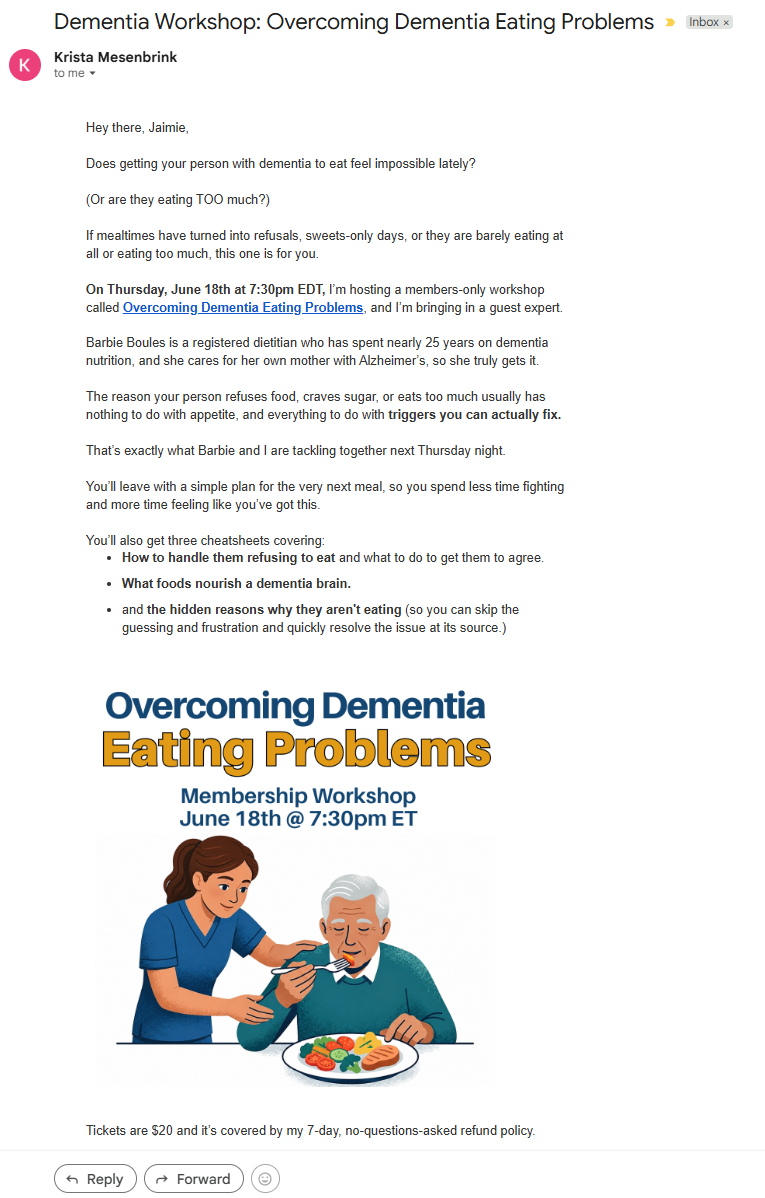
A real campaign email the AI marketer wrote - exactly as it landed in the inbox.
The pattern for your business: most companies are sitting on years of "what worked" data - email stats, social analytics, past campaigns - that their marketing never learns from. Closing that loop is a training exercise, not a hiring decision.